Japanese Ramen Simulator: Beer Guide: Fill Level, Foam & Tutorial
Understand the confirmed beer fill threshold, foam comments, tutorial changes and first-beer achievement without assuming a perfect ratio.
How full must a beer mug be to avoid the insufficient-beer penalty?
Beer and foam combined must exceed 70% of the mug’s capacity to avoid the documented insufficient-beer penalty. Exactly 70% still falls within the penalty condition. This threshold concerns total fill, not beer liquid alone, and exceeding it does not establish that the drink will receive a perfect rating.
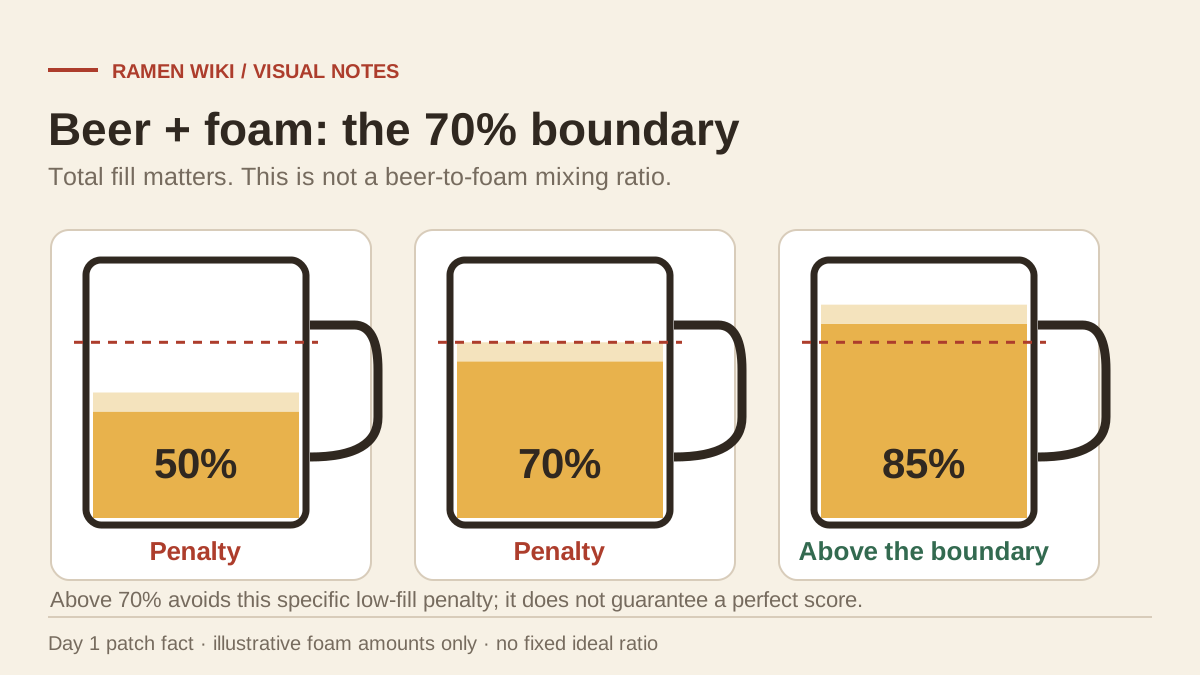
The official Day 1 update makes the boundary explicit:
| Total beer plus foam | Result established by the patch |
|---|---|
| Below 70% of mug capacity | Insufficient-beer penalty |
| Exactly 70% | Insufficient-beer penalty |
| Above 70% | Outside this specific insufficient-beer condition |
| No foam | Warning comment; missing foam itself does not deduct points |
Read the fill rule together with the foam rule. A mug above the threshold can still receive feedback, and the update does not publish a universal liquid-to-foam ratio. Do not convert the 70% figure into a “70% beer, 30% foam” recipe: it describes the low-fill boundary.
Does a foam warning mean that the order failed?
A warning about missing foam is distinct from the insufficient-beer penalty. The patch says the absence of foam itself does not deduct points. The game’s official description still treats balancing liquid and foam as part of pouring beer, so use the complete feedback rather than interpreting one warning as every scoring rule.
The Steam description confirms the pouring task. Neither it nor the patch gives a fixed ideal ratio for all beer orders. If a drink receives poor feedback, first distinguish a low total fill from a foam comment; do not assume adding foam alone fixes every issue.
An editorial check before delivery is simple: inspect the combined fill, read any available condition information and keep the mug associated with its customer’s order. When several mugs or drinks are stacked, the patch says the displayed condition and remaining amount refer to the top item that will be taken next.
Why does the tutorial no longer need a completely filled mug?
The launch update relaxed the beer tutorial’s completion condition so a completely full mug is no longer required. It also allows beer-pouring work completed before the relevant instruction appears to count toward tutorial progress. Follow the current objective text rather than an older guide that insists every tutorial mug must be filled completely.
Tutorial completion and customer rating are separate checks. A tutorial change does not remove the documented low-fill penalty during service. Use the current patch notes if an old instruction or screenshot differs from what you see.
For regular service, this editorial sequence keeps the checks separate:
- Confirm that beer belongs to the active order.
- Pour while watching the mug.
- Check total fill against the documented threshold.
- Review foam feedback without treating it as a fixed ratio.
- Deliver the drink to the correct customer.
The order workflow helps coordinate that drink with ramen or gyoza and rice bowls. A completed food item is not a substitute for checking the rest of the order.
What unlocks “The Perfect Pour”?
Serve beer once to meet the official achievement condition. “The Perfect Pour” is the achievement’s name, not a published requirement to reach a perfect beer score. You do not need to infer a special foam ratio or an exact full-mug target from the name to understand its stated condition.
The official achievement page supplies that requirement. Keep achievement progress separate from improving drink quality: the former has a clear first-service condition, while the latter should be guided by current comments and the documented fill boundary.
Related Articles
cooking
Japanese Ramen Simulator: Broth & Tare: Preparation and Bottle Handling
Prepare broth and handle tare bottles using confirmed launch-patch rules, including carrying five bottles and pouring while holding one.
cooking
Japanese Ramen Simulator: Gyoza & Rice Bowls Guide
Plan gyoza and rice-bowl service, distinguish confirmed menu names and check launch-patch fixes for rice heating and loaded gyoza.
cooking
Japanese Ramen Simulator: Ramen Recipes & Confirmed Menu
Check the confirmed ramen menu, Tantanmen broth options and ingredient preparation, without relying on unverified quantities or scoring formulas.
Was this helpful?
Thanks for the feedback!